Micro-loans,
micro-industry, low-tech mushrooms, chickens and
goats
create employment, income
and hope in the developing world.
This is a guidance page for project leaders but if
you are a visitor - you are also welcome. All of this advice and much more is contained in our
Leader's Manual which you can download free
here in .pdf
format.
For the Goat Bank that gives a future to orphans click
here
For a beautiful showcase of different projects
click here
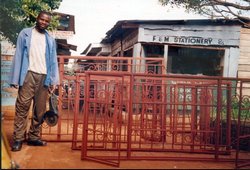
Where does Banking for the Poor come from?
During the last 15 years
micro-loans for micro-business have been our means of helping a lot of poor people in Africa and
India to move towards self-sufficiency and the
ability to help others in their family and in their churches.
The inspiration for such a loan granting "Bank" came
originally from Deuteronomy 15, 7-11 in the Bible.
"But if there are any poor people in your towns when you arrive in the land the Lord your God is giving to you, do not be hard-hearted or tight-fisted towards them.
Instead
be generous and lend them whatever they need. Do not be mean spirited and refuse someone a loan because the year of release is at hand. If you refuse to make the loan and the needy person cries out
to the Lord , you will considered guilty of sin. Give freely without begrudging it, and the Lord your God will bless you in everything you do."
How do you do it?
1. We receive funds in the form of gifts as "investments"
from our friends and supporters in the UK and overseas. Jesus
said to some of his servants to whom he had entrusted money, "Put
this money to work until I come back." (Luke 19.13)
When you have read how good and effective this project
is you might like to send a gift to help us to start another banking for the
poor project. We always have a waiting list.
or click
here for
alternatives
2. We take applications for new projects from leaders,
students or graduates from of one our network of Schools of Mission,
a woman or a man with a vision for serving the poor and with the necessary
spiritual and administrative skills.
We believe in partnership without
control or ownership. After approval
we equip our partner with
start-up funds
and he or his organisation or church will
also raise some local funds obviously on a very much lesser scale but we see their material contribution as very valuable and it is a clear sign of ownership, risk sharing and partnership.
3. The leader who is 'on-site' and now in close relationship
with us responds to one local village or group at a time
and announces the availability of micro-loans. The people are informed
that credit is available to lend in small amounts for the one
purpose of creating genuine self-employment through micro-industries
or working from home with the sole goal of being able
to raise the owner and the workers to a place of self-sufficiency
in life and enabling them eventually to be generous towards
others.
4. The bank offers either interest-free or very low
interest loans of say, $50, $100 maybe up to $150, but no more.
The loan has to be repaid over 6, 12 or 24 months in weekly instalments
out of earnings beginning immediately.
Compared to the commercial bank rates of 18% and above and the loan
shark rates of anything up to 100% or more a 2% rate is welcomed by
all and is no burden. Some bank projects do not charge interest at
all but expect that the beneficiary brings a gift at the
end to increase the general fund for the use of others.
If a gift of products is brought, then these are sold in the markets
or churches and the money added to the general fund. As such the fund
is revolving, slowly increasing, always going out and always coming
back in for others.
5. The Bank scheme is governed by a local committee
of men and women appointed for the job, including our main
contact person.
They receive verbal applications from widows, orphans and poor
people in general of all ages, the only condition being that these
people would be refused by a normal commercial bank. Preference
is given to women, then to the most destitute of people, people without
land and skilled people who are trapped in bonded labour. The committee
or their representative trains the applicants to understand
and handle their simple responsibilities.
Our Bank is glad to welcome men and women who cannot read or write and are only
able to sign with an X or by the muddy imprint of their thumbs. We have no papers or contracts, we trust the poor. We do not ask for security.
Of course the applicant, however poor, has be a person of known background
and integrity as well as being a faithful member of a congregation, well
known to his or her pastor, priest or other spiritual leader of high
repute. The applications committee make enquiries.
The following practice is
essential, not to do this invites multiple failure of borrowers:
The applicant must
join a small number of other applicants in a group for self-help, exchange of money-making ideas, encouragement and for the finding of ways out of difficulty or
disaster that an individual might face in the future.
6. The verbal application has to include the explanation of a
simple business plan, enough to show that the project has been
diligently considered and is expected to be feasible. The applicant
must show that they have the skills to do the job, or if not then
they should first apply for a loan or a gift for skill training at
a known and acceptable school.
There are 7 things that the applications committee will need to know:
-
WHAT is the proposal - exactly?
-
WHY will this work? Is there a market for the product or service?
-
WHO is to be involved - who are the customers, the workers, the supervisors,
the advisors?
- WHERE
-
will the business be located - exactly?
- WHEN will the project start, and when will it be up
and running?
- HOW MUCH will it cost to set up the business?
- HOW will it happen - first step, the second step and
so on?
What happens then?
If the application receives the favour of the committee then the applicant receives the money and begins to work on his her project under the regular weekly supervision and self-help meeting of the
group and under the care of the member of the bank committee who calls to
collect the repayments. He is perhaps a businessman from the churches who has offered his time and experience for this service as his missions offering.
As soon as the instalments begin to be paid or the loan is repaid in full, the incoming funds are immediately added to the general fund and go out again as soon as possible into the hands of the next
approved applicant. The original beneficiary may apply for a further loan to develop their business.
Our Bank has approved projects such as the provision of seeds or young
animals, sewing machines, carts, maybe with a donkey, cows, goats,
or the provision of market stalls or street food stalls - micro-businesses
that soon produce employment and uncomplicated cash returns.
We avoid sponsoring any hi-tech or high maintenance items.
In
general, during all the years of operation the "Bank" has enjoyed the full
cooperation of the applicants, and our only failures have come through war
atrocities or the untimely natural deaths of the applicants. Women
have been the most faithful borrowers and we have learned from this.
Overall this "Bank for the Poor" has been a great success
and has launched a good number of people on the way to the dignity
of self-sufficiency and ability to be generous to others.
See the Aduku Village
Project in Uganda
We have a waiting list of new banking projects for the poor.
Would you consider sponsoring a new project with a gift towards the
start-up capital. Thank you.
For the Goat Bank that
gives a future to orphans click
here
For a beautiful showcase of different projects
click here
If you are a leader, a student or a graduate from our of our many
DCI Schools of Mission around the world and you wish to make an application
for a new project please see this
page.
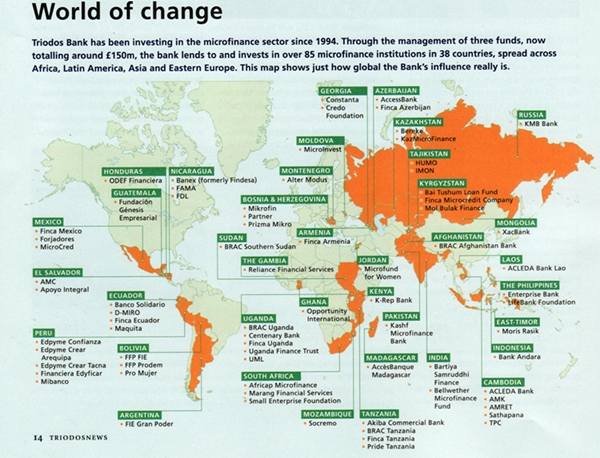
Other sources of micro-finance and advice are:
Grameen
Opportunity International Medic
International
Links International
Global Giving
Kiva Farms
International
Micro Finance Gateway
Micro Credit Summit
CGAP
|